
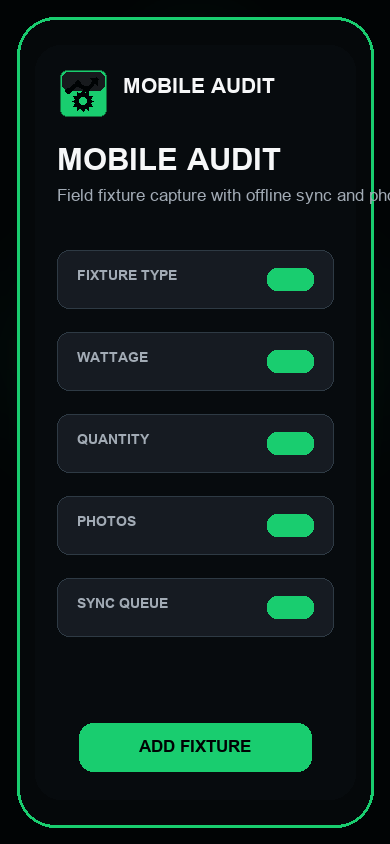
 Field captureVerified platform capability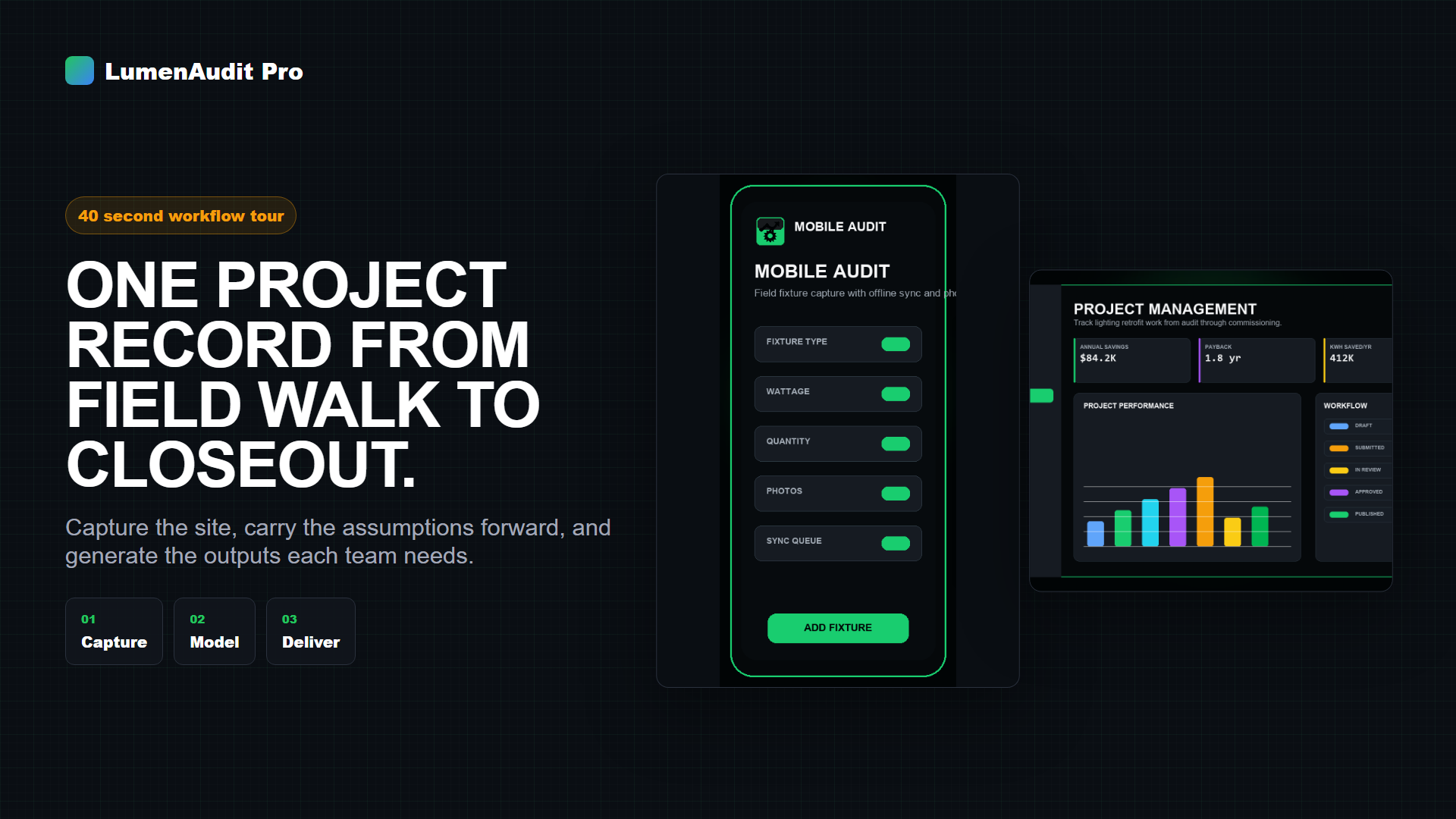
WORLD / CONNECTED00.00
01 / SHARED RECORDOPERATIONS MODE
Every energy project runs on one record.
From field audits to CFO-ready proposals in one tool.
Replace spreadsheet chaos with an audit-to-proposal workflow built for ESCOs and contractors. Start with a connected LED lighting retrofit, then carry energy audits, utility rebates, and ESCO proposals through the same record.
THE OPERATING BELIEF Capture once. Carry assumptions forward. Produce the outputs each team needs. Open the ROI calculator02 / SPREADSHEET FAILURETRACE BROKEN
The leak is not one bad cell. It is the handoff.
A quantity is captured once, then copied into a proposal, a BOM, and a purchase order. A rounding shift or a stranded photo can travel farther than the person who made it.
FIELDPROPOSALBOMPO
240 fixtures240#REF!--
28W input28W27.9W27.9W
Photosphonemissing--
Legacy tools make the mismatch hard to see until margin, material, or approval is already moving.
03 / OS BLUEPRINTSTATE MACHINE
Five stages. One state machine.
Field → Engineering → Financials → Procurement → Commissioning. The project record stays intact while the work changes hands.
- 01Auditfield capture and photos
- 02Scope + BOMquantities and materials
- 03Proposal + Financingutility rebates, NPV, IRR
- 04Commissioning + CloseoutM&V and reporting
THREE OPERATING MODESAuditSales EngineeringAccount Growth
The free beta starts with the lighting audit workflow. Controls, HVAC, EV charging, electrical estimating, plan takeoff, rebates, financials, portfolio analytics, governance and compliance remain connected to the same operating system.
Lighting AuditHVAC AuditEV Charging SurveyControls + CommissioningElectrical EstimatingPlan / PDF TakeoffRebates + FinancialsCloseout / ReportingPortfolio AnalyticsGovernance and compliance
04 / TRUST ENGINEREVIEWABLE BY DESIGN
Every number has a trail.
State the input, carry it forward, and generate the appendix. Tenant isolation and a transparent assumptions engine make the work easier to review.
Fixture quantityField captureLOCKED
Utility rateProject inputSTATED
Incentive basisProgram ruleDATED
Calculation appendixGenerated outputREADY
Planning inputs are labeled as inputs. Product captures use sample data. No claim here is engineering sign-off or utility approval.
04.5 / OUTPUTSFOR CFO REVIEW
A clean handoff for the next reviewer.
See annual savings, payback, NPV, ROI, kWh saved, carbon impact, and stated incentive assumptions beside the scoped retrofit.
01Proposal PDFfinancial model and assumptions
02Excel BOMsupplier-ready line items
03Closeoutmeasurement and verification
05 / OPERATING MODESBUYER FIT
One record, three ways to win.
AUDITCapture the site
Offline-ready field capture, photos, quantities, and evidence.
Add a proposal engine to your retrofit work.SALES ENGINEERINGReconcile the scope
Keep energy audits, utility rebates, savings, and ESCO proposals in view.
See how LumenAudit fits your current audit workflow.ACCOUNT GROWTHCarry the portfolio
Move from one lighting project to multi-measure work without a new file stack.
EVALUATION SCOPEMulti-measure scopeLighting, controls, HVAC, and EV readiness stay connected.
Auditable incentivesStated inputs and dated rules remain visible.
Finance reviewPayback, NPV, ROI, and assumptions travel with the project.
05.5 / EVIDENCE GALLERYILLUSTRATIVE PRODUCT CAPTURES USING SAMPLE DATA
See the system in the shape of the work.
Field captureVerified platform capability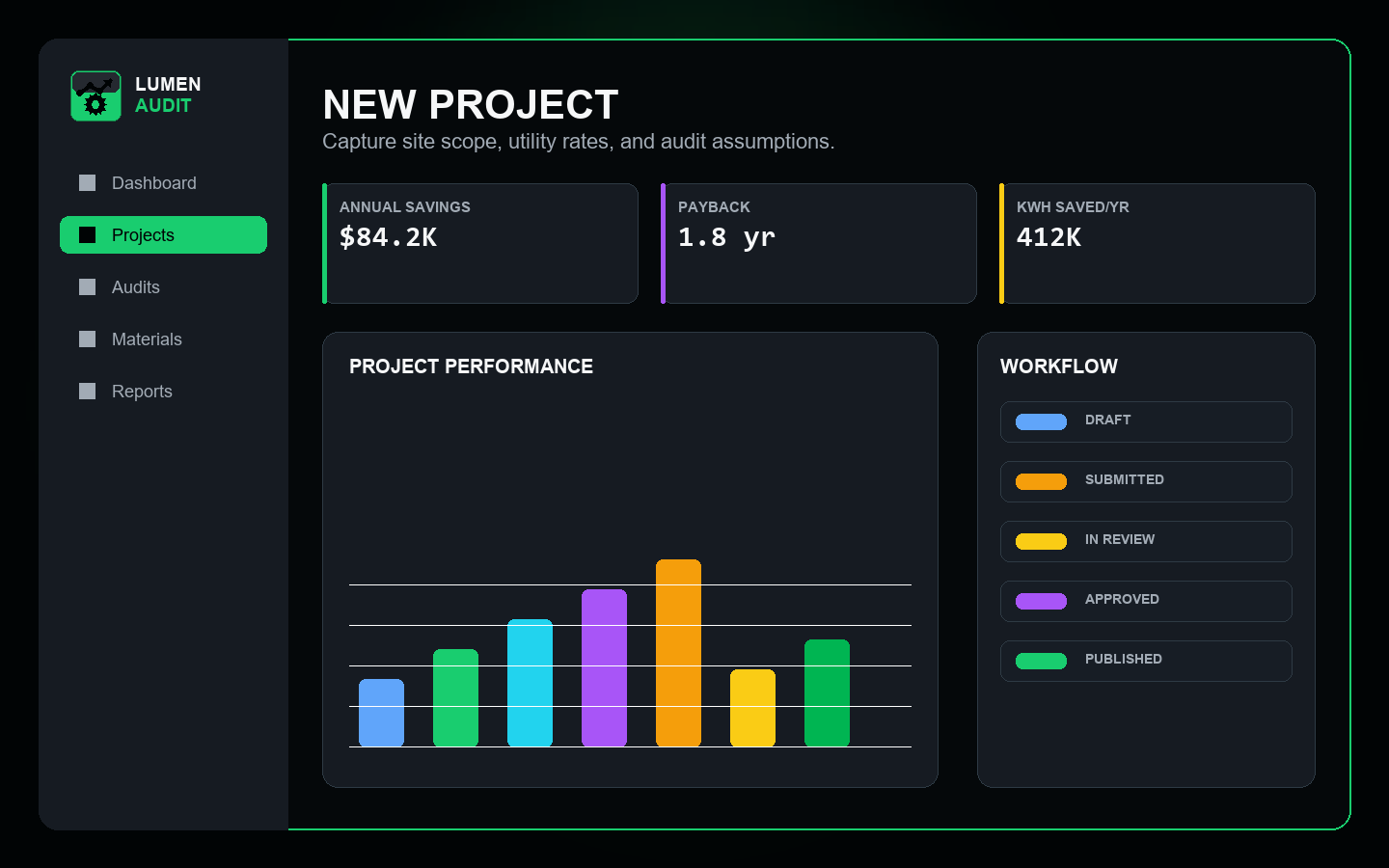 Scope builderSample project data
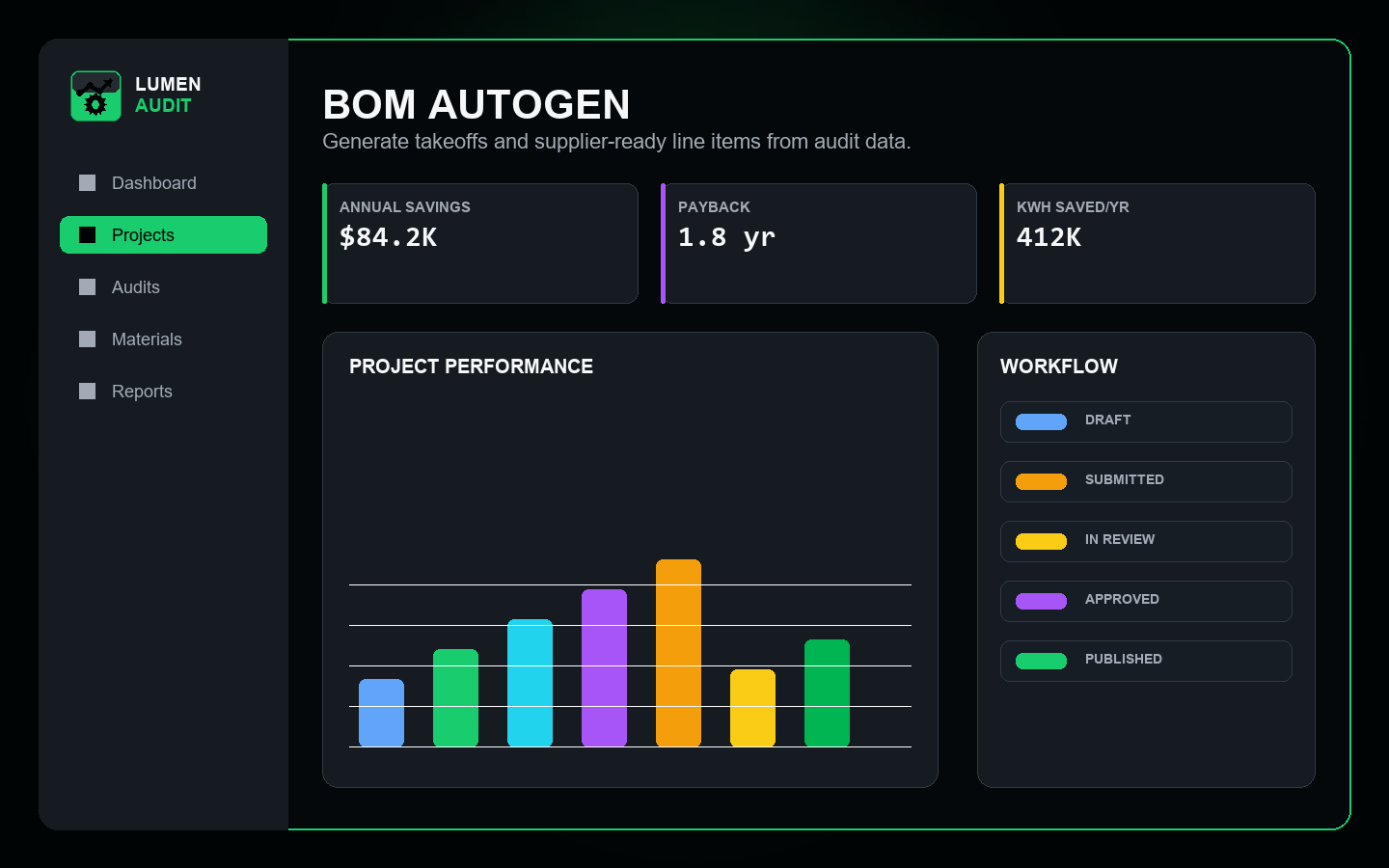 BOM autogenVerified platform capability
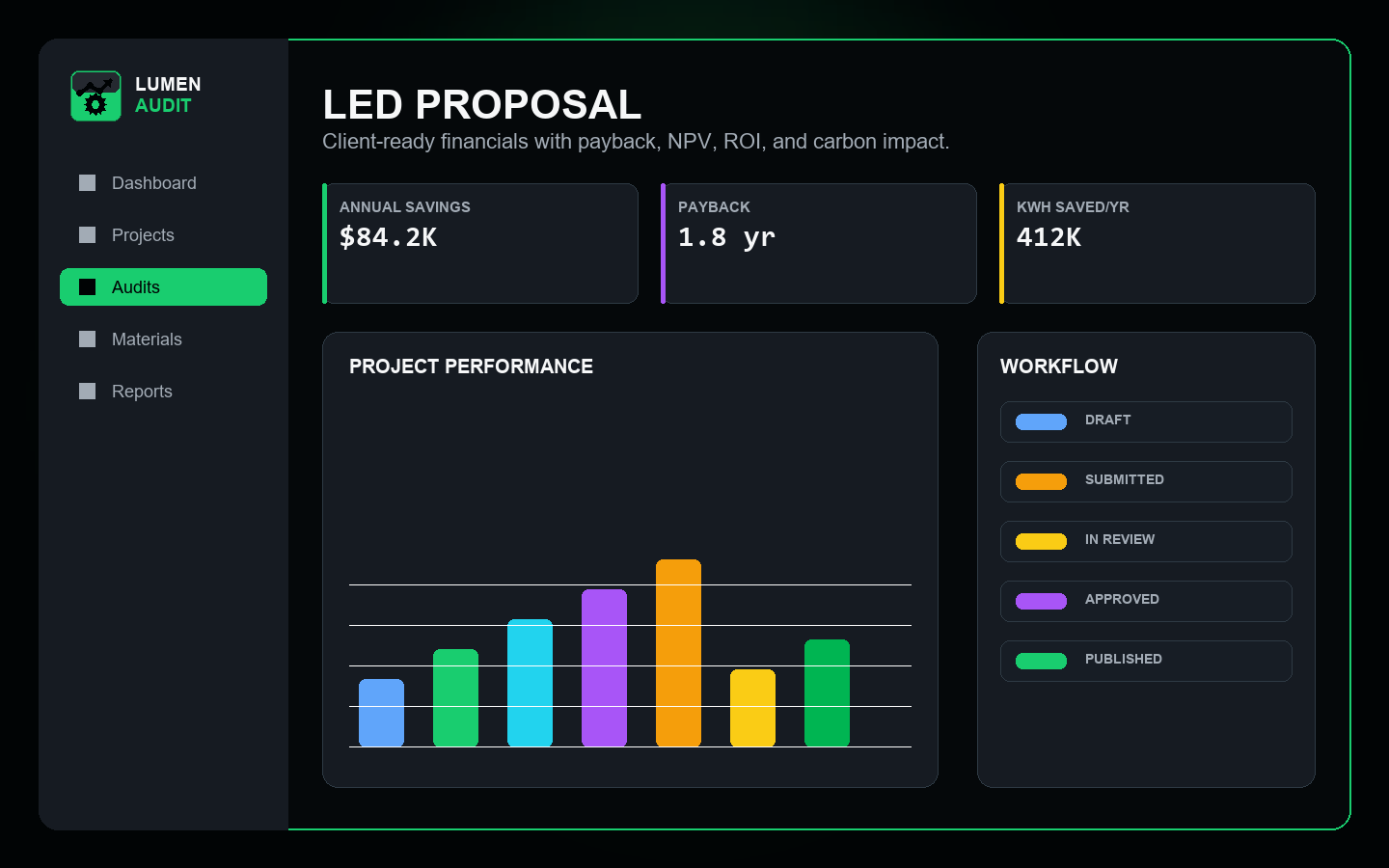 ProposalPlanning estimateFinancial modelEvaluation scope
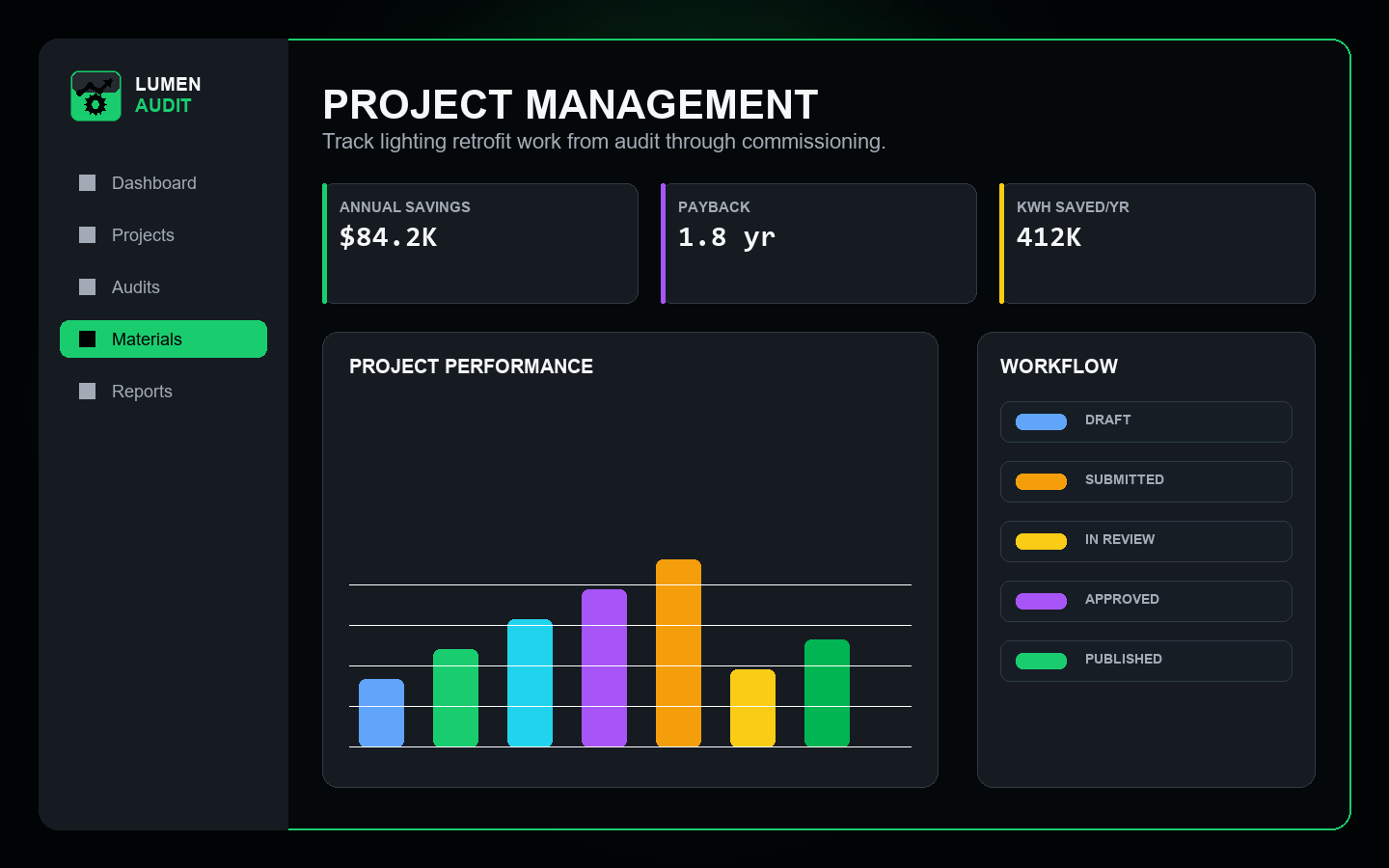 CloseoutSample project data
Customer logos, testimonials, and measured case studies will be added after written approval and verified outcome review.
05.75 / FREE BETADAY ONE
Start with the lighting path. Keep the record open.
- One-user accessStart with one tenant-isolated workspace and beta onboarding.
- Project setupBuild a project object around the real site.
- Offline-ready field captureCarry photos and measurements out of the office.
- Savings, payback, and ROIKeep inputs and outputs together.
- Proposal PDF exportPrepare a finance-ready review surface.
- Excel BOM exportCarry quantities into procurement.
- Sample project dataUse a guided starting point.
- Additional discipline modulesOpen through evaluation as the platform expands.
06 / PAYBACKINPUT-DRIVEN / ILLUSTRATIVE
Find the leak before it finds your margin.
EXCEL LEAK SIMULATOR#REF! MODE
Use your own fixture counts. The exposure below is an illustrative scenario, calculated from the inputs you can see.
ILLUSTRATIVE MARGIN EXPOSURE—240 fixtures × 3 handoffs × 15 min ÷ 60 × $55/hr
LOCKED MODELSame quantities flow to proposal, BOM, and PO with no re-key exposure.
ROI CALCULATOR$44,352/year
67 hours/monthhours regained
$3,696/monthlabor value
70% less proposal-production timetime reduction
13.4 hours per auditor/monthper auditor
Not applicablepayback
Illustrative planning model. Edit the assumptions to reflect your workflow. It is not a historical customer result or a promise of savings.
06.5 / WALKTHROUGHONE RECORD / FIVE STATES
One project record from field walk to closeout.
Capture the site, carry the assumptions forward, and generate the outputs each team needs.
Book a guided demoTry the free scanner instead- 01 / FIELDCapture once
Quantities, photos, and evidence stay on the project record.
- 02 / ENGINEERINGReconcile scope
Carry assumptions into measures, controls, and equipment planning.
- 03 / FINANCIALSModel the case
Review savings, incentives, payback, and ROI as planning inputs.
- 04 / OUTPUTSGenerate the handoff
Produce the proposal and matching BOM without re-keying.
- 05 / CLOSEOUTTrack the next state
Keep procurement, commissioning, and reporting tied to one record.
07 / CLOSEOUTROADMAP
Plan the operating system.
LIGHTING BETAFree
One user, lighting audit capture, sample project data, proposal PDF, and Excel BOM. Apply first; qualified teams are provisioned after review.
No credit card · One user · Lighting audit, proposal PDF, and Excel BOM includedApply for the Design-Partner BetaTEAMPricing TBD
Shared projects, multiple seats, templates, additional disciplines, and higher project volume.
Join the team-plan waitlistENTERPRISEContact
Portfolio reporting, governance, security review, and managed rollout through evaluation.
Request Enterprise AccessBeta accounts will not be converted to a paid plan without notice.
07.5 / ARCHITECTURECALM BY DESIGN
Institutional trust, without the theater.
Tenant isolationDatabase-enforced project scope
Access controlsRole-aware workspace boundaries
API and exportProposal PDF and Excel BOM outputs
Data ownershipRetention and deletion follow governing terms
Managed rolloutSecurity review through evaluation
Compliance certificationsDiscussed during enterprise review
Enterprise capability matrix
| Capability | Current framing | Review state |
|---|---|---|
| Tenant isolation | Database-enforced | Available |
| SSO | Security review | Evaluation scope |
| API and export | Proposal PDF + Excel BOM | Available |
| Data ownership | Retention and deletion | Governing terms |
| Managed rollout | Security and support | Evaluation scope |
| Compliance certifications | Discussed during review | Not represented as certified |
08 / NEXT STATEREADY WHEN YOU ARE
Run your next project on one record.
Take one real site from field capture through savings, proposal, and BOM. If the numbers hold up, bring the rest of the portfolio.
Prefer a walkthrough of your own process? Book a Workflow Review